Unlocking History: 38 Antique Odd Surgical Anatomy Overlays for Creators
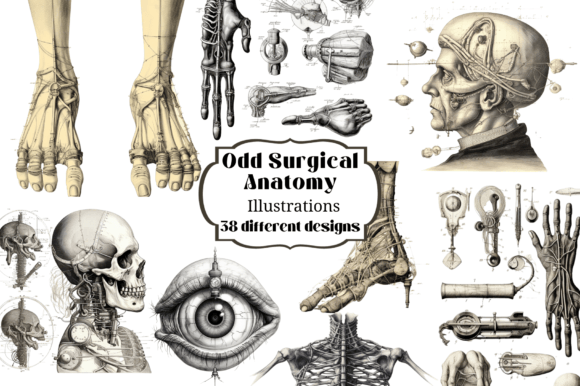
There is a specific kind of beauty found in the macabre and the medical—a fascination with the intricate, often unsettling details of human anatomy as documented in centuries past. For designers, artists, and crafters who thrive on creating work with depth, texture, and a touch of the strange, finding authentic visual assets can be a challenge. This collection of 38 antique odd surgical anatomy overlays offers a direct portal to that world. These are not generic graphics; they are transparent PNG illustrations derived from historical sources, capturing the raw, detailed style of vintage surgical and anatomical study. The appeal lies in their authenticity and versatility, providing a rich visual language for projects that demand a sense of history, complexity, and intellectual curiosity.
The Visual Language of Medical Antiquity
What makes these Antique Odd Surgical Anatomy Overlays so compelling is their distinct visual personality. They carry the weight of old-world craftsmanship, featuring intricate line work, stippled shading, and the kind of detail that was once essential for medical education. You'll find elements like skeletal fragments, muscular studies, organ diagrams, and perhaps even curious surgical tools, all rendered with a level of precision that modern clipart rarely achieves. The "odd" descriptor is apt—these are not sterile, modern diagrams but rather illustrations that possess a certain character, sometimes bordering on the surreal or the anatomically peculiar, which is exactly what gives them their unique charm.
Their transparent background is a critical feature for practical application. It allows these complex illustrations to be layered seamlessly onto any surface—digital or physical. Imagine a skeletal hand overlaying a vintage map for a logo, or a detailed heart diagram becoming the textured background of a social media post. The style is inherently editorial, lending itself to projects where storytelling and visual hierarchy are paramount. They function less like a traditional serif font or sans serif font used for body text and more like a powerful display font—meant to capture attention, convey a specific mood, and anchor a design's theme.
From Scrapbooks to Brand Identities: Real-World Applications
The utility of this digital download extends far beyond a single niche. For the hobbyist crafter, these overlays are gold. They transform a simple junk journal page into a narrative piece, add profound depth to scrapbook layouts commemorating medical history or personal health journeys, and create unforgettable, one-of-a-kind greeting cards. The high-resolution 300 DPI PNG files ensure that even when printed on a home printer for a collage or a handmade book, the details remain crisp and clear, far superior to the lower-quality samples often shown online.
For commercial creators, the applications are equally powerful. A small business owner launching a line of apothecary goods, a publisher designing a cover for a historical fiction novel, or a blogger in the gothic or alternative wellness space can use these assets to build a cohesive and intriguing brand identity. They are perfect for packaging design that needs to stand out, for creating compelling social media graphics that tell a story, or for developing website headers that immediately establish a unique aesthetic. When used thoughtfully, these overlays act as a powerful design asset, elevating a project from generic to deeply considered.
Integrating Anatomical Art with Modern Typography
The key to using such a visually dense asset effectively lies in balance and pairing. These overlays are inherently complex, so they often work best when set against cleaner elements. This is where understanding font pairing becomes crucial. A bold, clean sans serif font for headings can provide a striking modern contrast to the intricate vintage anatomy, creating a dynamic visual hierarchy. Alternatively, pairing them with a elegant, readable script font or a handwritten font can enhance the personal, journal-like quality for more intimate projects.
Think of these overlays as the foundational texture or focal point. Your text—whether it's a headline, a product description, or journaling—needs to remain highly legible. This might mean placing text in a solid-colored box or banner that overlaps the overlay, or using the anatomy as a subtle background texture with reduced opacity. Testing is essential. A design that looks balanced on screen might feel overwhelming in print. Always consider the final application: a logo needs simplicity for recognition, while a book interior spread can handle more layered complexity. The commercial use license included with your purchase means you can confidently use these assets in client work and products for sale, but always ensure the final design itself is your unique creation.
Practical Guidance for Your Creative Process
Before diving in, take a moment to evaluate your project's fit. Is the theme aligned with history, science, medicine, the macabre, or vintage curiosity? If so, you're on the right track. When you download the zip file, you'll find all 38 images neatly labeled. Browse through them not just as pictures, but as potential design elements. Could that elbow joint become a unique divider? Could that detailed eye illustration be a focal point for a book cover?
Start by experimenting with one overlay in a simple composition. See how it interacts with your color palette and chosen typefaces. Does it enhance the message or distract from it? Remember, the goal is to use these antique odd surgical anatomy overlays to add value and narrative, not just visual noise. They are a premium resource for a reason—their detail and authenticity are unmatched. By treating them with the same strategic consideration you would a premium font