Why Floral Line Art Bouquets Are a Designer's Secret Weapon
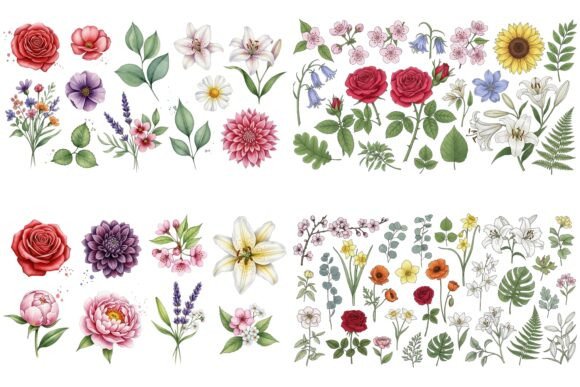
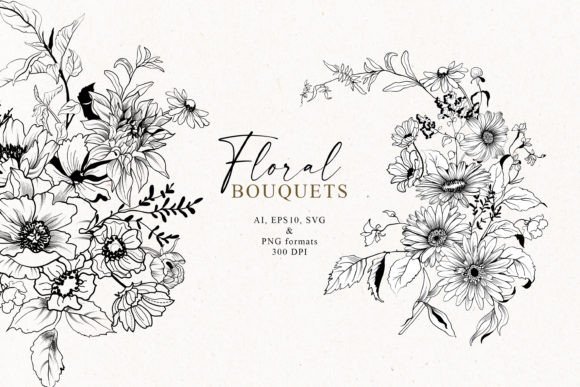
There's a certain magic in a single, unbroken line that suggests the curve of a petal or the arc of a stem. Floral Line Art Bouquets capture this elegance with a minimalist, hand-drawn feel that is both modern and timeless. These aren't just simple outlines; they are carefully composed illustrations that balance negative space with delicate detail. The style feels organic, sophisticated, and intentionally crafted, making it a versatile design asset that can elevate a project from ordinary to memorable.
Where This Style Truly Shines
The real strength of these vector bouquets lies in their adaptability. They are not a display font meant for large headlines, but rather a set of creative font assets—graphic elements that function with the same strategic importance as typography in a brand identity. Their clean, transparent backgrounds make them perfect for layering. Imagine them on a wedding suite: a delicate bouquet framing a couple's initials on an invitation, or as a subtle watermark on RSVP cards. This consistency across a stationery set creates a cohesive, professional look that guests notice.
Beyond weddings, their application is broad. For a small business owner, a single bouquet can become the cornerstone of a logo design, especially for brands in wellness, beauty, floristry, or artisanal goods. The line art style translates beautifully across packaging design, gift tags, and thank-you cards, reinforcing brand recognition with a soft, approachable aesthetic. In editorial design, these illustrations can break up text-heavy pages, act as elegant section dividers, or enhance the margins of a magazine or lookbook. They are equally effective in web design as decorative elements in a site's header, footer, or as subtle icons in a services section.
Practical Guidance for Using These Assets
When you download a set like this, you're getting more than just pretty pictures. The inclusion of multiple file formats—EPS 10, AI, SVG, and PNG—is a practical consideration for any serious creator. The vector formats (EPS, AI, SVG) are essential for scalability. You can enlarge a bouquet to fit a large-format print for a trade show banner or shrink it for a favicon without any loss of quality. The high-resolution PNGs with transparent backgrounds are ready for immediate use in social media graphics, blog posts, or quick mockups.
A key part of integrating any design asset is evaluation. Don't just drop a bouquet into a layout and hope it works. Consider its visual weight. A detailed, dense bouquet will command more attention and could overwhelm a delicate sans serif font. A simpler, more open illustration might pair better with a bold serif font or a script font, allowing each element to breathe. Test it in black and white first. Does the composition hold up? The contrast between the line art and the background is crucial for readability, especially when used behind text.
Think about the personality you need. The elegant, flowing lines of these bouquets suggest a certain brand perception: one of care, artistry, and natural beauty. They can soften the corporate edge of a sans serif typeface or complement the warmth of a handwritten font. Use them to build a visual hierarchy. A bouquet can draw the eye to a key piece of information or create a focal point on a page that guides the viewer's journey through your content.
Real-World Applications and Final Thoughts
For the crafter or hobbyist, these assets are a gateway to professional-looking projects. Create custom stationery, decorate planners, or design unique prints for your home. For the entrepreneur, they are a cost-effective way to develop a sophisticated brand identity from the start, avoiding the need for expensive custom illustration for every single touchpoint. The consistency of using the same core illustration set across your logo design, website, and printed materials builds a subconscious recognition with your audience.
Ultimately, Floral Line Art Bouquets are more than just decorative elements. They are strategic tools for visual communication. They influence how a brand is perceived—adding a layer of refinement and intentionality. They improve engagement by creating visual interest without clutter. When chosen thoughtfully and integrated with an understanding of font pairing and layout principles, they help create a cohesive, professional, and deeply personal aesthetic that resonates. Whether you're designing a wedding invitation, building a brand from the ground up, or crafting a heartfelt gift, these illustrations provide a beautiful foundation to build upon.